

Kirschstein creative enabled UX research to be transformed from an ad-hoc, tactical activity into a continuous, scalable system that directly informed product strategy, category design, and brand positioning.
By embedding behavioural intelligence directly into UX flows, the organisation accelerated decision making, increased user engagement and established a defensible position in psychometric analysis.
Kirschstein creative led a three month branding and platform modernisation project, in direct collaboration with the executive team. Insights generated from the research ecosystem informed visual identity, messaging, values and interaction design.
This ensured the brand evolution was not subjective or trend led, but grounded in validated behavioural data strengthening trust, clarity, and market differentiation.

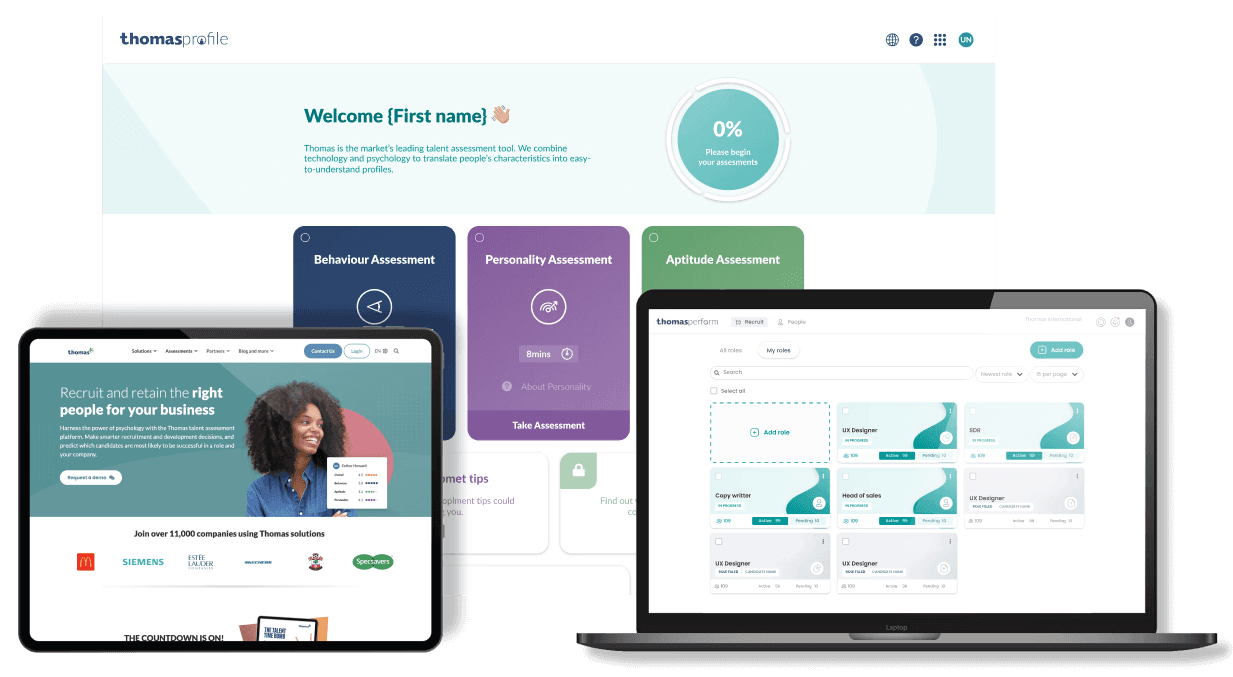
Continuous Learning and Re-Engagement
The engagement system was designed to learn and increase in value over time. As users contributed more behavioural data, the platform surfaced progressively richer insights unique to their psychological profile.
When new patterns emerged, such as shifts in trait correlations or peer benchmarks, users were proactively notified. This created a feedback loop where re-engagement was driven by the intrinsic value of self understanding, not transactional triggers like job seeking.
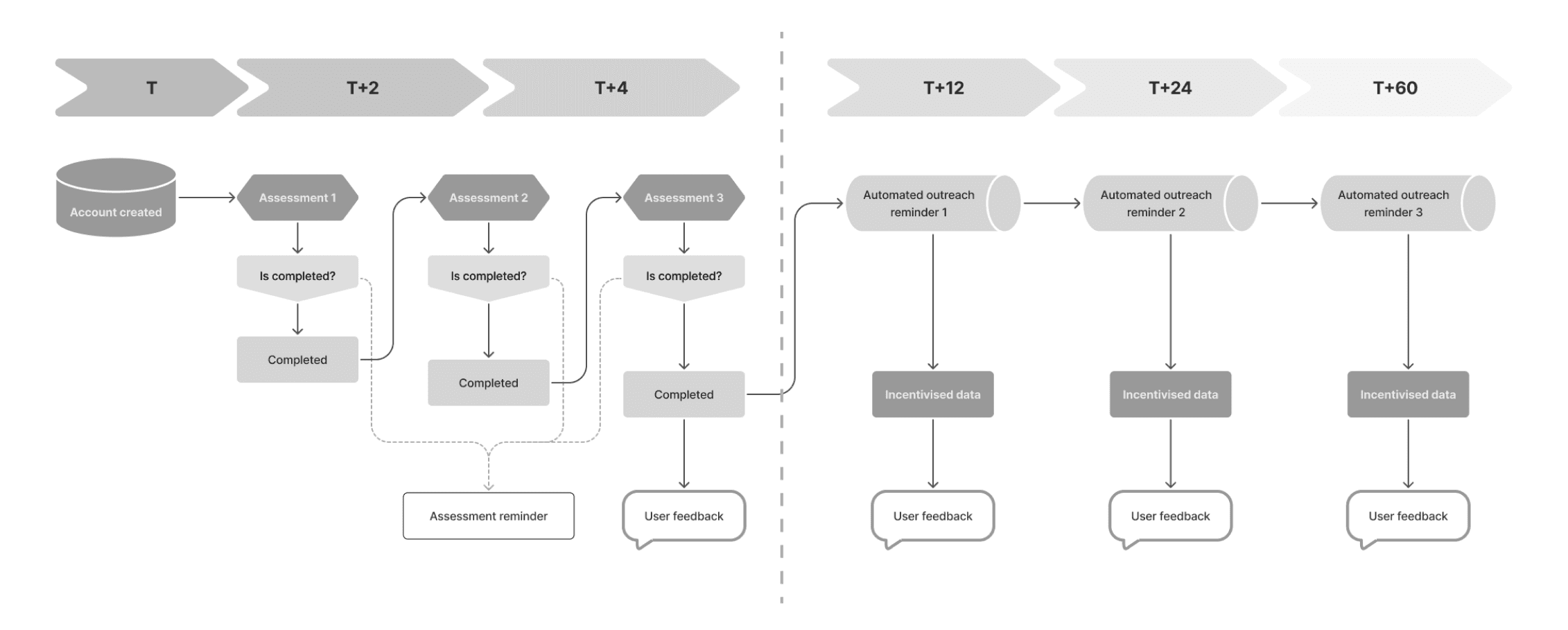
Onboarding was redesigned to serve dual purposes; behavioural data acquisition and progressive disclosure of personalised insight. Through psychometric instrumentation, motivational orientation signals were captured early. These inputs informed downstream personalisation while continuously enriching the behavioural model powering the platform.
A strategic walkthrough
Principal Insight
When research is designed as infrastructure, not output, it becomes a strategic asset. By embedding behavioural intelligence directly into UX, Thomas International gained a system that continuously informs product, brand and category decisions.