
A Cultural Shift through UX maturity
Scaling user-centred design to reduce risk, improve predictability, and align global teams
Client
FTSE Russell
London Stock Exchange Group
Service Provided
Head of Product design (Hands on)
Head of Product design
Design team size
2
A Cultural Shift through UX maturity
Scaling user-centred design to reduce risk, improve predictability, and align global teams
Client
London Stock Exchange Group
Service Provided
Head of Product design
Design team size
2
Impact at a Glance
UX maturity was scaled across a complex, regulated enterprise environment, shifting teams from sequential, requirement driven delivery to user-centred discovery and iterative execution.
UX led validation brought clarity earlier in the lifecycle, reduced duplication across initiatives and enabled teams to deliver with greater confidence, speed and quality. UX evolved from a centralised dependency into a trusted, embedded capability.
10+
Initiatives delivered
10+
Initiatives delivered
9.2
Average user satisfaction score
9.2
Average user satisfaction score
50+
Design handovers supported
50+
Design handovers supported
400+
Global users engaged
400+
Global users engaged
20+
Product Owners upskilled in UCD
20+
Product Owners upskilled in UCD
The Goal:
FTSE Russell looked to advance UX maturity across its enterprise product ecosystem to improve delivery speed, reduce risk, and increase user satisfaction.
The objective was to embed user centred design as a strategic, scalable capability, aligning user insight with product strategy, enabling teams to validate decisions earlier.
Kirschstein creatived role was to lead this shift hands on: evolving culture, UX capability, and ways of working while continuing to deliver at pace.
1
The Goal:
FTSE Russell looked to advance UX maturity across its enterprise product ecosystem to improve delivery speed, reduce risk, and increase user satisfaction.
The objective was to embed user centred design as a strategic, scalable capability, aligning user insight with product strategy, enabling teams to validate decisions earlier.
Kirschstein creatived role was to lead this shift hands on: evolving culture, UX capability, and ways of working while continuing to deliver at pace.
1
The Challenge:
FTSE Russell operates in a highly regulated, global environment with multiple products and teams working in parallel.
Design expertise was centralised, creating bottlenecks and limiting teams’ ability to independently discover, test, and iterate.
Requirements were output focused rather than outcome driven, resulting in limited feedback loops, duplicated effort across teams, thus a reduced confidence in decision making.
2
The Challenge:
FTSE Russell operates in a highly regulated, global environment with multiple products and teams working in parallel.
Design expertise was centralised, creating bottlenecks and limiting teams’ ability to independently discover, test, and iterate.
Requirements were output focused rather than outcome driven, resulting in limited feedback loops, duplicated effort across teams, thus a reduced confidence in decision making.
2
The Result:
UX was established as a scalable, embedded capability across the organisation. Teams adopted a consistent user centred delivery model, supported by shared frameworks and streamlined governance.
This shift improved development velocity, reduced late stage change requests and rework, increasing user satisfaction and trust.
UX became a trusted partner in decision making, influencing strategy rather than reacting to delivery.
3
The Result:
UX was established as a scalable, embedded capability across the organisation. Teams adopted a consistent user centred delivery model, supported by shared frameworks and streamlined governance.
This shift improved development velocity, reduced late stage change requests and rework, increasing user satisfaction and trust.
UX became a trusted partner in decision making, influencing strategy rather than reacting to delivery.
3
Reusable Function Design
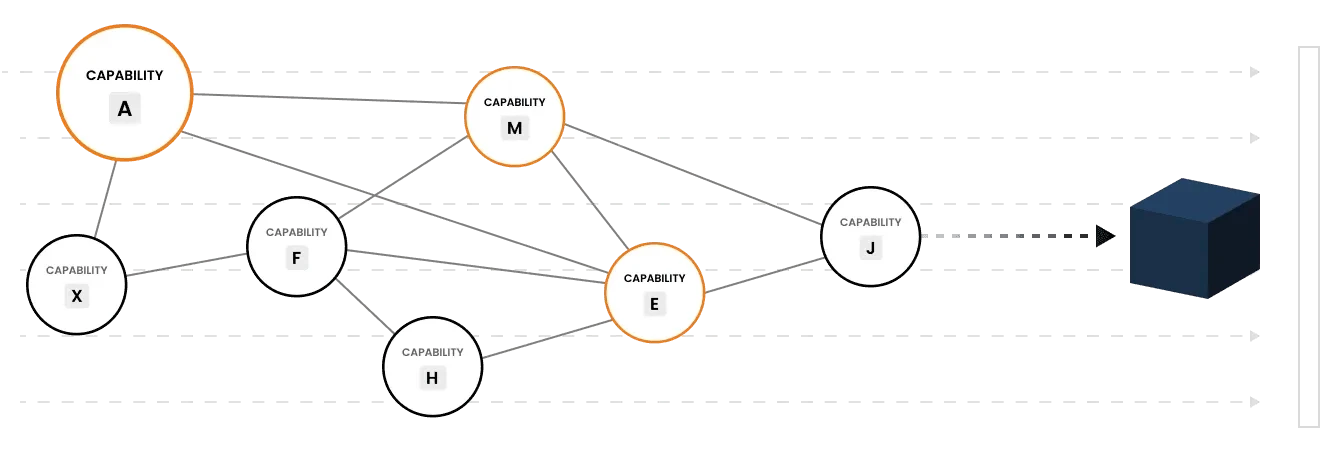
Scalable capability models were introduced through a shared design system, component libraries and Storybook integration. Reusable, validated UX functions enabled teams to reduce build time, maintain consistency across products, prototype and experiment rapidly and deliver confidently without reintroducing fragmentation.
UX Centre of Excellence (CoE)
A UX Centre of Excellence was established to standardise practice across regions while enabling local autonomy. Amongst many items the CoE provided governance, tooling, quality standards, research operations, mentorship and a cross-discipline community of practice.
Clear roles, shared ownership, and trusted processes streamlined handovers and improved delivery consistency at scale.
Changing culture
Embracing change
Building trust
Streamlining build
Dev handover
Project Overview
Project Overview
A hands-on walkthrough of the engagement
1
Product & Maturity Assessment
Decision ranking workshops were run across core platforms to assess UX maturity, adoption and delivery risk. This exposed misaligned products, duplicated initiatives and high cost problem areas; clearly identifying where UX led intervention would have the greatest impact.
1
Product & Maturity Assessment
Decision ranking workshops were run across core platforms to assess UX maturity, adoption and delivery risk. This exposed misaligned products, duplicated initiatives and high cost problem areas; clearly identifying where UX led intervention would have the greatest impact.
1
Product & Maturity Assessment
Decision ranking workshops were run across core platforms to assess UX maturity, adoption and delivery risk. This exposed misaligned products, duplicated initiatives and high cost problem areas; clearly identifying where UX led intervention would have the greatest impact.
2
Changing Teams Dynamics
Teams were supported in moving away from waterfall delivery toward iterative, user driven models. Early discovery and validation became standard practice, reducing cycle times from months (or years) to weeks and significantly increasing confidence in direction and outcomes.
2
Changing Teams Dynamics
Teams were supported in moving away from waterfall delivery toward iterative, user driven models. Early discovery and validation became standard practice, reducing cycle times from months (or years) to weeks and significantly increasing confidence in direction and outcomes.
2
Changing Teams Dynamics
Teams were supported in moving away from waterfall delivery toward iterative, user driven models. Early discovery and validation became standard practice, reducing cycle times from months (or years) to weeks and significantly increasing confidence in direction and outcomes.
3
Enabling UX at Scale
The UX Centre of Excellence formalised standards, tooling, research operations, and quality expectations across regions. Mentorship and upskilling ensured teams could operate independently while maintaining strong design to engineering and design to architecture alignment.
3
Enabling UX at Scale
The UX Centre of Excellence formalised standards, tooling, research operations, and quality expectations across regions. Mentorship and upskilling ensured teams could operate independently while maintaining strong design to engineering and design to architecture alignment.
3
Enabling UX at Scale
The UX Centre of Excellence formalised standards, tooling, research operations, and quality expectations across regions. Mentorship and upskilling ensured teams could operate independently while maintaining strong design to engineering and design to architecture alignment.
4
Design Forums
Regular cross functional forums aligned Product, UX, Engineering and Architecture around real user problems. With more than twenty senior stakeholders involved, these sessions reduced misalignment, prevented late stage surprises, and improved collective decision making.
4
Design Forums
Regular cross functional forums aligned Product, UX, Engineering and Architecture around real user problems. With more than twenty senior stakeholders involved, these sessions reduced misalignment, prevented late stage surprises, and improved collective decision making.
4
Design Forums
Regular cross functional forums aligned Product, UX, Engineering and Architecture around real user problems. With more than twenty senior stakeholders involved, these sessions reduced misalignment, prevented late stage surprises, and improved collective decision making.
5
Implementing the UCD Process
A practical UCD playbook embedded user engagement throughout the lifecycle using shared artefacts; personas, end-to-end user journeys, test plans, PRD and TRD documentation. More than twenty non-designers were upskilled, enabling Product Owners globally to generate and communicate user insight consistently.
5
Implementing the UCD Process
A practical UCD playbook embedded user engagement throughout the lifecycle using shared artefacts; personas, end-to-end user journeys, test plans, PRD and TRD documentation. More than twenty non-designers were upskilled, enabling Product Owners globally to generate and communicate user insight consistently.
5
Implementing the UCD Process
A practical UCD playbook embedded user engagement throughout the lifecycle using shared artefacts; personas, end-to-end user journeys, test plans, PRD and TRD documentation. More than twenty non-designers were upskilled, enabling Product Owners globally to generate and communicate user insight consistently.
6
Building User Trust
A bi-weekly research cadence combined surveys, usability testing, and continuous feedback across regions. This led to a 66% reduction in user errors, fewer late stage changes and increased confidence in releases. Over time, UX shifted from a delivery function to a trusted strategic partner, maintaining oversight through shared end-to-end journeys while enabling teams to move faster.
6
Building User Trust
A bi-weekly research cadence combined surveys, usability testing, and continuous feedback across regions. This led to a 66% reduction in user errors, fewer late stage changes and increased confidence in releases. Over time, UX shifted from a delivery function to a trusted strategic partner, maintaining oversight through shared end-to-end journeys while enabling teams to move faster.
6
Building User Trust
A bi-weekly research cadence combined surveys, usability testing, and continuous feedback across regions. This led to a 66% reduction in user errors, fewer late stage changes and increased confidence in releases. Over time, UX shifted from a delivery function to a trusted strategic partner, maintaining oversight through shared end-to-end journeys while enabling teams to move faster.
Principal Insight
UX maturity does not scale through frameworks alone. It scales when teams are given the confidence, capability, and shared language to make better decisions earlier.
This engagement demonstrated that embedding UX as a cultural and operational capability can reduce risk, improve predictability, and unlock delivery at enterprise scale.